
PPWR: Was Onlinehändler jetzt tun müssen und was bis 2030 anstehtPPWR: What online retailers must do now and what lies ahead by 2030
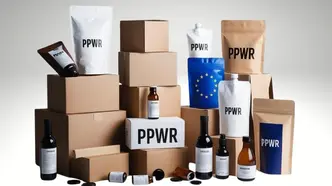
Seit dem 12. August 2026 gilt die europäische Verpackungsverordnung – die PPWR, kurz für Packaging and Packaging Waste Regulation. Für Onlinehändler ist das keine Randnotiz aus Brüssel: Sie verschicken Verpackungen, und zwar jede einzelne Bestellung.
Die gute Nachricht vorweg: Der größte Teil dessen, was ab 2030 verlangt wird, ist heute noch nicht fällig. Die schlechte: Was Sie jetzt tun müssen, betrifft Papierkram, und Papierkram kann teuer werden, wenn er fehlt.
Der wichtigste Unterschied: Verordnung statt Richtlinie
Die PPWR löst die alte Verpackungsrichtlinie ab. Eine Richtlinie musste jedes Land erst in eigenes Recht gießen. Eine Verordnung gilt unmittelbar in allen Mitgliedstaaten, ohne diesen Zwischenschritt.
Praktisch heißt das: Die Regeln laufen künftig europaweit gleich. Für einen Händler, der nach Österreich, Frankreich und in die Niederlande liefert, ist das mittelfristig eigentlich eine Erleichterung, denn bisher war jedes Land ein eigenes Regelwerk. Kurzfristig ist es eine Umstellung, denn das deutsche Verpackungsgesetz bleibt zunächst daneben bestehen und wird angepasst.
Was jetzt zu tun ist
Registrierung und erweiterte Herstellerverantwortung
Wer Verpackungen erstmals in einem Markt bereitstellt, gilt als Hersteller im Sinne der Verordnung. Auch dann, wenn er nur Ware weiterverkauft, die jemand anderes produziert hat. Daran hängt die Registrierung und die Beteiligung an einem Rücknahmesystem.
Der Punkt, der Händler mit Auslandsversand am häufigsten kalt erwischt: Wer in einem Land verkauft, in dem er nicht niedergelassen ist, braucht dort einen Bevollmächtigten. Ohne ihn ist der Verkauf in diesem Markt nicht rechtmäßig und Marktplätze prüfen das inzwischen selbst, weil sie mit in der Verantwortung stehen.
Kennzeichnung
Verpackungen bekommen eine harmonisierte Kennzeichnung zum Material und zur richtigen Entsorgung. Für Versandkartons betrifft das die Verpackung, die bei Ihrem Kunden ankommt. Also auch die, die Ihr Fulfillment-Dienstleister für Sie einsetzt.
Nachweise und Daten
Sie müssen belegen können, welche Verpackungsmengen Sie in Verkehr gebracht haben, nach Material getrennt. Wer das erst am Jahresende aus Lieferscheinen rekonstruiert, hat ein heftiges Projekt vor der Brust statt eine Meldung abzugeben.
Was bis 2030 ansteht
Die Fristen sind gestaffelt, und die meisten großen Anforderungen greifen zum Jahreswechsel 2029/2030. Wer heute Verpackungen einkauft oder einen Dienstleister auswählt, entscheidet aber schon jetzt mit, wie teuer dieser Umstieg wird.
- Leerraum. Versand- und Transportverpackungen dürfen nur noch einen begrenzten Anteil Luft enthalten. Der Karton, der zu 60 Prozent aus Füllmaterial besteht, ist damit kein Kostenproblem mehr, sondern ein Regelverstoß.
- Recyclingfähigkeit. Verpackungen müssen so gestaltet sein, dass sie sich tatsächlich verwerten lassen. Verbundmaterialien, die sich nicht trennen lassen, fallen darunter.
- Rezyklatanteile. Kunststoffverpackungen müssen einen Mindestanteil wiederverwerteten Materials enthalten.
- Wiederverwendung. Für bestimmte Verpackungsarten kommen Quoten für Mehrwegsysteme.
- Verbote. Einzelne Einwegformate verschwinden ganz.
Die genauen Werte und ihre Berechnung werden derzeit noch durch Durchführungsrechtsakte ausgefüllt. Prüfen Sie den aktuellen Stand, bevor Sie größere Beschaffungsentscheidungen darauf gründen und lassen Sie sich von Ihrem Verpackungslieferanten schriftlich geben, was er zusichert.
Was ein Fulfillment-Dienstleister dabei übernimmt
Hier liegt der Teil, den viele Händler unterschätzen: Ein großer Teil der PPWR-Arbeit ist Lagerarbeit.
- Die Verpackung selbst. Kartonagen in abgestuften Größen, passende Zuschnitte, weniger Füllmaterial. Das ist genau die Optimierung, die auch das Porto senkt und die Leerraumvorgabe macht aus einer Sparmaßnahme eine Pflicht.
- Die Mengendaten. Ein Lager, das jede Sendung erfasst, weiß, wie viele Kartons welcher Größe und wie viel Füllmaterial im Jahr hinausgegangen sind. Das ist die Grundlage Ihrer Meldung und der Unterschied zwischen einer Auskunft und einer Schätzung.
- Die Kennzeichnung. Was auf der Versandverpackung stehen muss, bringt der Dienstleister auf, weil er sie packt.
- Die eigene Prüfpflicht. Die Verordnung nimmt Fulfillment-Dienstleister ausdrücklich mit in die Pflicht: Sie müssen sich vergewissern, dass ihre Auftraggeber ihren Registrierungspflichten nachkommen. Ein Dienstleister, der Sie danach fragt, ist kein lästiger Bürokrat sondern einer, der die Verordnung gelesen hat.
Checkliste: jetzt
- In jedem Land, in das Sie liefern, registriert? Bevollmächtigter benannt?
- Wissen Sie, welche Verpackungsmengen Sie im laufenden Jahr in Verkehr gebracht haben, nach Material getrennt?
- Liefert Ihr Lager oder Dienstleister diese Zahlen automatisch, oder werden sie am Jahresende geschätzt?
- Tragen Ihre Versandverpackungen die verlangte Kennzeichnung?
- Haben Sie von Ihrem Verpackungslieferanten schriftliche Angaben zu Material und Recyclingfähigkeit?
- Weiß Ihr Fulfillment-Dienstleister, dass er selbst eine Prüfpflicht hat? Und kommt er ihr nach?
Checkliste: bis 2030
- Kartonsortiment auf Größenstufen umgestellt, damit der Leerraum eingehalten wird?
- Füllmaterial überprüft? Menge, Material, Trennbarkeit?
- Verbundmaterialien identifiziert, die künftig nicht mehr zulässig sind?
- Bei Kunststoffverpackungen: Rezyklatanteil mit dem Lieferanten geklärt?
- Für Ihre Produktkategorien geprüft, ob Mehrwegquoten kommen?
- Ein Datum im Kalender, an dem Sie den Stand der Durchführungsrechtsakte erneut prüfen?
Der ehrliche Schluss
Die PPWR macht Verpackung zu einer Position, die dokumentiert, gemeldet und belegt werden muss. Das ist Aufwand. Aber es ist Aufwand, der zum größten Teil dort anfällt, wo ohnehin gepackt wird. Wer das Packen bereits ausgelagert hat, hat den größeren Teil dieser Arbeit schon in fremden Händen.
Der eine Punkt, den Ihnen niemand abnimmt, ist die Registrierung. Sie hängt an Ihrer Firma, nicht an Ihrem Lager. Wenn Sie diesen Artikel mit einem einzigen Vorsatz verlassen, dann mit diesem: Prüfen Sie diese Woche, ob Sie in jedem Markt, in den Sie liefern, ordentlich gemeldet sind.
Verpackung und Meldedaten prüfen lassen
Wir sehen uns Ihr Kartonsortiment, Ihre Füllmaterialien und Ihre Mengendaten an und sagen Ihnen, was für die Meldung fehlt.
The European Packaging Regulation – the PPWR, short for Packaging and Packaging Waste Regulation – has applied since 12 August 2026. For online retailers, this is no marginal note from Brussels: they ship packaging, with every single order.
The good news first: the largest part of what will be required from 2030 is not yet due today. The bad news: what you have to do now concerns paperwork, and paperwork can become expensive if it is missing.
The most important difference: regulation instead of directive
The PPWR replaces the old Packaging Directive. A directive first had to be cast into national law by each country. A regulation applies directly in all member states, without this intermediate step.
In practice this means: in future the rules will be the same across Europe. For a retailer who delivers to Austria, France and the Netherlands, that is actually a relief in the medium term, because until now every country was its own set of rules. In the short term it is a change, because the German Packaging Act will initially remain in place alongside it and will be adapted.
What needs to be done now
Registration and extended producer responsibility
Anyone who makes packaging available on a market for the first time counts as a producer within the meaning of the regulation. Even if they only resell goods that someone else produced. Registration and participation in a take-back system depend on this.
The point that most often catches out retailers shipping abroad: anyone selling in a country in which they are not established needs an authorised representative there. Without one, selling in that market is not lawful, and marketplaces now check this themselves, because they share the responsibility.
Labelling
Packaging receives harmonised labelling on the material and on correct disposal. For shipping boxes, this concerns the packaging that arrives at your customer. So also the packaging your fulfilment provider uses on your behalf.
Records and data
You must be able to document which quantities of packaging you have placed on the market, separated by material. Anyone who only reconstructs this from delivery notes at the end of the year faces a major project instead of simply submitting a report.
What lies ahead by 2030
The deadlines are staggered, and most of the major requirements take effect at the turn of the year 2029/2030. But anyone buying packaging or choosing a service provider today is already helping to determine how expensive this transition will be.
- Empty space. Shipping and transport packaging may only contain a limited proportion of air. The box that consists of 60 percent filling material is therefore no longer a cost problem, but a breach of the rules.
- Recyclability. Packaging must be designed so that it can actually be recovered. Composite materials that cannot be separated fall under this.
- Recycled content. Plastic packaging must contain a minimum proportion of recycled material.
- Reuse. Quotas for reusable systems are coming for certain types of packaging.
- Bans. Individual single-use formats will disappear entirely.
The exact values and how they are calculated are currently still being fleshed out through implementing acts. Check the current status before you base major procurement decisions on it, and get your packaging supplier to put in writing what they guarantee.
What a fulfilment provider takes on in all this
This is the part that many retailers underestimate: a large share of the PPWR work is warehouse work.
- The packaging itself. Cardboard boxes in graduated sizes, suitable cuts, less filling material. That is exactly the optimisation that also reduces postage costs, and the empty space requirement turns a cost-saving measure into an obligation.
- The quantity data. A warehouse that records every shipment knows how many boxes of which size and how much filling material went out over the year. That is the basis of your report and the difference between a piece of information and an estimate.
- The labelling. Whatever has to appear on the shipping packaging is applied by the service provider, because they are the ones packing it.
- Their own duty to check. The regulation explicitly places fulfilment providers under obligation too: they must satisfy themselves that their clients are complying with their registration obligations. A service provider who asks you about this is not an annoying bureaucrat but someone who has read the regulation.
Checklist: now
- Registered in every country you deliver to? Authorised representative appointed?
- Do you know which packaging quantities you have placed on the market in the current year, separated by material?
- Does your warehouse or service provider supply these figures automatically, or are they estimated at the end of the year?
- Does your shipping packaging carry the required labelling?
- Do you have written information from your packaging supplier on material and recyclability?
- Does your fulfilment provider know that they have a duty to check themselves? And do they comply with it?
Checklist: by 2030
- Box range converted to size increments so that the empty space limit is met?
- Filling material reviewed? Quantity, material, separability?
- Composite materials identified that will no longer be permitted in future?
- For plastic packaging: recycled content clarified with the supplier?
- Checked for your product categories whether reuse quotas are coming?
- A date in the calendar on which you review the status of the implementing acts again?
The honest conclusion
The PPWR turns packaging into an item that has to be documented, reported and evidenced. That is effort. But it is effort that largely arises where packing is being done anyway. Anyone who has already outsourced the packing has the greater part of this work already in someone else's hands.
The one point nobody can take off your hands is registration. It attaches to your company, not to your warehouse. If you leave this article with a single resolution, let it be this one: check this week whether you are properly registered in every market you deliver to.
Have your packaging and reporting data checked
We take a look at your box range, your filling materials and your quantity data and tell you what is missing for the report.
Einfach konfigurierenEasy configure
Konfigurieren Sie Ihr Fulfillment-AngebotConfigure Your Fulfillment Offering
Jetzt Angebot anfordernRequest a Quote Now