
Wenn das eigene Lager das Wachstum ausbremst: die Schwelle bei rund 50 Bestellungen am TagWhen your own warehouse slows down growth: the threshold at around 50 orders a day
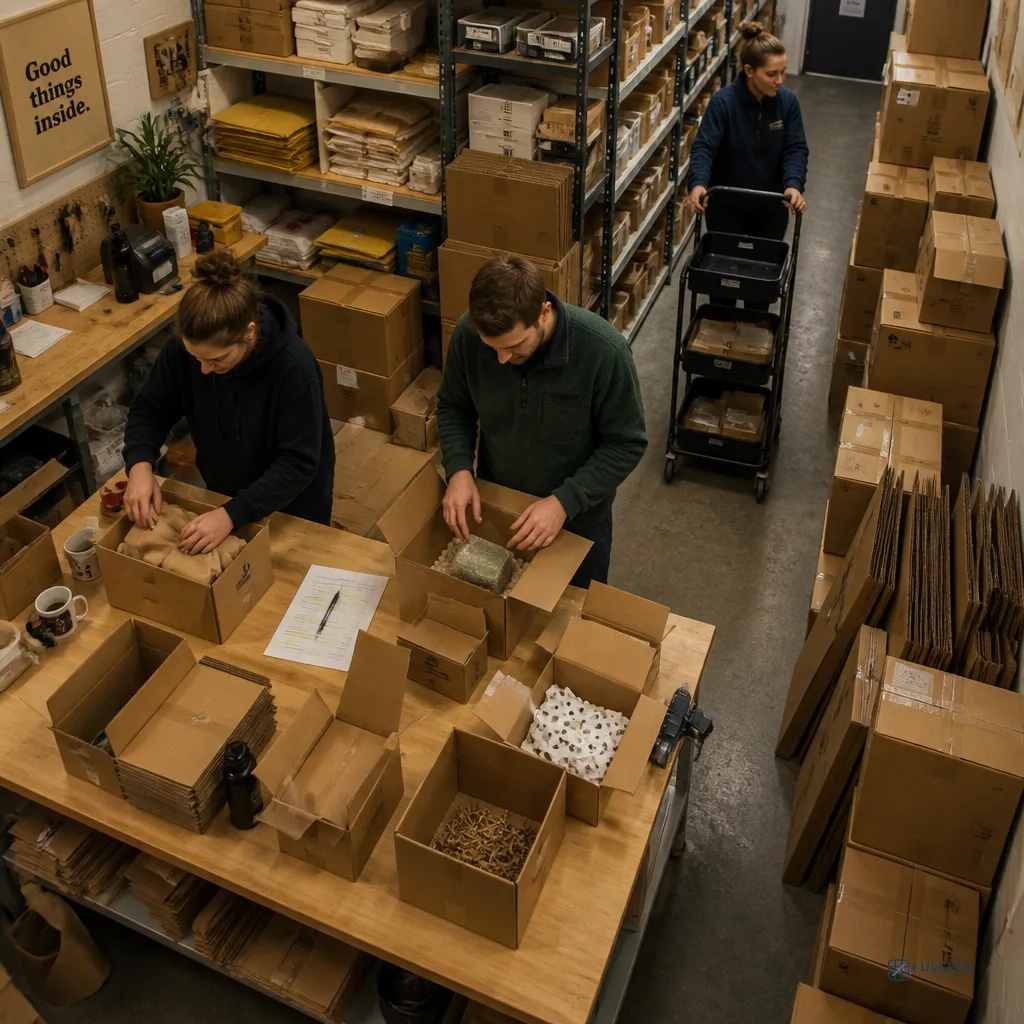
Die Kampagne zündet und das Lager hält nicht mit
Stell dir vor, deine nächste Kampagne läuft genau so, wie du es geplant hast. Die Ads greifen, ein Influencer postet dein Produkt, und im Shop-Backend läuft eine Bestellung nach der anderen ein. Aus 20 Aufträgen am Tag wird ein Vielfaches. Im Marketing ist das ein guter Tag. Im Lager ist es der Moment, in dem alles zusammenläuft.
Denn plötzlich entscheidet nicht mehr die Kampagne über den Erfolg, sondern der Packtisch. Wie schnell jemand einen Artikel findet. Ob die Kartons in der richtigen Größe da sind. Ob der Bestand im Shop noch dem entspricht, was tatsächlich im Regal liegt. Wenn hier etwas klemmt, merkt das der Kunde als Erstes: verspätete Lieferung, falscher Artikel, Support-Ticket.
Genau um diesen Punkt geht es in diesem Beitrag. Wir schauen uns an, warum dein Shopsystem die Logistik nicht abbilden kann, an welchen Anzeichen du erkennst, dass die Schwelle erreicht ist, und was Fehler und Verzögerungen in Wahrheit kosten. Danach wird es konkret: Wie professionelle Logistik ab dieser Stelle arbeitet und wie du entscheidest, ob du selbst aufbaust oder auslagerst.
Warum dein Shopsystem kein Lagersystem ist
Zwei Kolleginnen packen parallel, eine dritte räumt gerade eine Retoure ein. Im Shop steht bei einem Artikel noch eine Einheit Bestand. Die wird verkauft. Nur liegt sie längst im Pickwagen einer offenen Bestellung, und die Retoure ist noch nicht geprüft. Am Abend fehlt ein Artikel, und niemand kann sagen, an welcher Stelle er verloren ging.
Der Grund ist simpel: Dein Shopsystem ist für den Verkauf gebaut, nicht für das Lager. Es kennt eine Zahl. Es kennt nicht:
- auf welchem Lagerplatz ein Artikel tatsächlich liegt
- ob er sich schon im Pickwagen einer laufenden Kommissionierung befindet
- ob eine Bestellung angefangen und nicht fertig gepackt wurde
- ob eine Retoure ungeprüft im Wareneingang steht und noch nicht verkaufsfähig ist
Solange eine Person packt, gleicht der Kopf diese Lücke aus. Sobald mehrere Menschen gleichzeitig durchs Lager laufen, geht das nicht mehr. Der digitale Bestand beschreibt dann einen Zustand, den es physisch so nicht mehr gibt. Überverkäufe, Stornos und Nachzählaktionen sind keine Pannen, sondern die logische Folge eines Systems, das für diese Aufgabe nie gedacht war.
Die Anzeichen, dass die Schwelle erreicht ist
Freitagabend, halb sieben. Zwei Leute stehen noch im Lager, auf dem Packtisch stapeln sich Kartons, dazwischen liegt eine handgeschriebene Liste mit Bestellungen, bei denen ein Artikel fehlt. Niemand weiß genau, ob er ausverkauft ist oder im Pickwagen liegt. So sieht der Moment aus, in dem ein Lager an seine Grenze kommt.
Die Symptome sind im Alltag gut erkennbar:
- Suchzeiten steigen, weil Artikel nicht mehr dort liegen, wo sie eigentlich liegen sollten
- Wege werden länger, weil Nachschub abgestellt wird, wo Platz ist
- Der Packtisch quillt über und wird zur Zwischenlagerfläche
- Bestellungen werden von oben nach unten abgearbeitet statt nach Priorität und Versandschluss
- Überverkäufe häufen sich, weil der Bestand im Shop nicht der Realität im Regal entspricht
- Abends folgt die hektische Nacharbeit, damit die Sendungen noch mitgehen
Als Orientierung liegt diese Schwelle bei vielen Marken bei rund 50 Bestellungen pro Tag. Sie ist keine feste Grenze. Je größer die Artikelzahl, je mehr Varianten und je mehr Positionen pro Auftrag, desto früher kippt das System. Bei einem schmalen Sortiment mit wenigen Schnelldrehern geht es länger gut.
Was dich Fehler und Verzögerungen tatsächlich kosten
Ein Kunde bestellt zwei Artikel, bekommt einen falschen davon geliefert, meldet sich beim Support, ihr schickt Ersatz und holt das Paket zurück. Ein einzelner Vorgang, der harmlos aussieht. Rechne ihn mit der Zahl der Bestellungen hoch, die an einem guten Tag rausgehen, und du hast eine Kostenposition, die in keiner Auswertung steht.
Die versteckten Kosten sortieren sich in fünf Gruppen:
- Packfehler und Ersatzsendungen: doppelte Versandkosten, doppeltes Handling, teils verlorene Ware. Die Höhe hängt an Warenwert, Paketgröße und daran, wie ähnlich sich deine Varianten sehen.
- Supportaufwand: jede Reklamation bindet Arbeitszeit, die sonst in Wachstum fließt. Treiber sind Ticketvolumen und Bearbeitungsdauer pro Fall.
- Überverkäufe und Stornos: entstehen, sobald Systembestand und Regal auseinanderlaufen. Besonders teuer bei Kampagnen und knappen Artikeln.
- Totes Kapital: falsch bewertete Bestände führen zu Nachbestellungen, die du nicht brauchst, und zu Fehlmengen, die du nicht siehst.
- Service-Level auf Marktplätzen: verspätete Sendungen wirken auf Sichtbarkeit und Kontostatus, also auf deinen Umsatz insgesamt.
Keine dieser Positionen taucht als eigene Zeile in der BWA auf. Spürbar sind sie trotzdem.
Wie professionelle Logistik ab dieser Stelle arbeitet
Freitagnachmittag, 180 offene Bestellungen, zwei Aushilfen am Packtisch. In einem Lager mit System ist das kein Ausnahmezustand, sondern ein normaler Tag. Der Unterschied liegt nicht an mehr Personal, sondern an fünf Bausteinen.
Ein Lagerverwaltungssystem führt Buch über jeden Lagerplatz. Schnelldreher bekommen feste Plätze in Griffhöhe, der Rest wird chaotisch eingelagert, also dort, wo Platz frei ist. Das System weiß, wo etwas liegt, und niemand muss suchen.
Scannerprozesse sichern jeden Schritt ab: Der Artikel wird beim Entnehmen und beim Packen verifiziert. Was nicht zur Bestellung gehört, wird abgelehnt, bevor das Paket zugeklebt ist.
Multi-Order-Picking bündelt mehrere Bestellungen zu einem Laufweg. Statt einmal pro Auftrag durchs Lager zu gehen, wird der Weg einmal gegangen und mehrfach genutzt.
Definierte Cut-off-Zeiten legen fest, bis wann eine Bestellung noch am selben Tag rausgeht. Das macht Versprechen im Shop belastbar.
Retouren laufen über den Wareneingang mit klarer Prüfung, Entscheidung und Rückbuchung, statt in einer Kiste zu warten.
Zusammen ergibt das Planbarkeit: Du weißt, was dein Lager an einem Tag leisten kann, bevor die Kampagne startet.
Selbst aufbauen oder auslagern: die Entscheidung
Du sitzt an einem Samstag im Lager, packst mit deinem Team die Rückstände vom Freitag ab und rechnest nebenbei durch, was ein zweiter Packtisch, ein Lagerverwaltungssystem und zwei zusätzliche Kräfte kosten würden. Genau an dieser Stelle steht die eigentliche Entscheidung an.
Der eine Weg ist der Aufbau im eigenen Haus: mehr Fläche, ein WMS, Scanner, geschultes Personal und jemand, der die Prozesse verantwortet. Das lohnt sich, wenn deine Mengen stabil planbar sind, deine Produkte besondere Handhabung brauchen und du Logistik als Teil deiner Marke verstehst.
Der andere Weg ist externes Fulfillment. Fläche, System und Personal sind vorhanden, Volumenspitzen aus Kampagnen oder Saisongeschäft fängt der Dienstleister ab, ohne dass du dafür dauerhaft Fixkosten trägst.
Für die Entscheidung zählen vor allem:
- dein Mengenprofil und die Schwankungsbreite über das Jahr
- Artikelanzahl, Varianten und Retourenquote
- verfügbares Kapital und die Bereitschaft, Fixkosten zu binden
- wie viel Führungszeit du dauerhaft in Logistik stecken willst
Wenn du wissen willst, welcher Weg für dich rechnerisch trägt: Bring deine Zahlen mit, wir gehen sie im Gespräch gemeinsam durch.
Passend dazu: Kein Lager, keine Krankmeldung: Was Händler gewinnen, wenn die Logistik außer Haus geht
The campaign takes off and the warehouse can't keep up
Imagine your next campaign runs exactly the way you planned it. The ads work, an influencer posts your product, and in the shop backend one order after another comes in. 20 orders a day turn into many times that. In marketing, that's a good day. In the warehouse, it's the moment where everything comes together.
Because suddenly it's no longer the campaign that decides success, but the packing table. How quickly someone finds an item. Whether boxes in the right size are available. Whether the stock in the shop still matches what is actually on the shelf. If something gets stuck here, the customer is the first to notice: late delivery, wrong item, support ticket.
That is exactly what this post is about. We look at why your shop system cannot map your logistics, which signs tell you that the threshold has been reached, and what errors and delays really cost. After that it gets concrete: how professional logistics works from this point on and how you decide whether to build it yourself or outsource.
Why your shop system is not a warehouse system
Two colleagues are packing at the same time, a third is putting away a return. In the shop, one item still shows one unit in stock. It gets sold. But it has long been sitting in the picking cart of an open order, and the return has not been checked yet. In the evening an item is missing, and nobody can say where it got lost.
The reason is simple: your shop system is built for selling, not for the warehouse. It knows one number. It does not know:
- which storage location an item is actually in
- whether it is already in the picking cart of an ongoing pick
- whether an order was started and not fully packed
- whether a return is sitting unchecked in incoming goods and is not yet sellable
As long as one person is packing, their head fills this gap. As soon as several people are walking through the warehouse at the same time, that no longer works. The digital stock then describes a state that physically no longer exists. Overselling, cancellations and recounts are not mishaps, but the logical consequence of a system that was never meant for this task.
The signs that the threshold has been reached
Friday evening, half past six. Two people are still in the warehouse, boxes are piling up on the packing table, and in between lies a handwritten list of orders where an item is missing. Nobody knows exactly whether it is sold out or sitting in the picking cart. That is what the moment looks like when a warehouse reaches its limit.
The symptoms are easy to spot in everyday work:
- Search times increase because items are no longer where they should be
- Walking distances get longer because replenishment is put down wherever there is space
- The packing table overflows and becomes a temporary storage area
- Orders are processed from top to bottom instead of by priority and shipping cut-off
- Overselling piles up because the stock in the shop does not match reality on the shelf
- In the evening comes the hectic catch-up so the shipments still go out
As a rough guide, for many brands this threshold is around 50 orders per day. It is not a fixed limit. The larger the number of items, the more variants and the more line items per order, the earlier the system tips over. With a narrow range and a few fast movers, things stay fine for longer.
What errors and delays actually cost you
A customer orders two items, receives the wrong one, contacts support, you send a replacement and collect the package. A single incident that looks harmless. Multiply it by the number of orders that go out on a good day, and you have a cost item that appears in no report.
The hidden costs fall into five groups:
- Packing errors and replacement shipments: double shipping costs, double handling, sometimes lost goods. The amount depends on the value of the goods, the parcel size and how similar your variants look.
- Support effort: every complaint ties up working time that would otherwise go into growth. The drivers are ticket volume and processing time per case.
- Overselling and cancellations: arise as soon as system stock and shelf drift apart. Particularly expensive during campaigns and for scarce items.
- Dead capital: incorrectly valued stock leads to reorders you don't need and shortages you don't see.
- Service levels on marketplaces: late shipments affect visibility and account status, and therefore your revenue as a whole.
None of these items shows up as a separate line in your monthly financial statement. You feel them anyway.
How professional logistics works from this point on
Friday afternoon, 180 open orders, two temps at the packing table. In a warehouse with a system, that is not a state of emergency but a normal day. The difference does not come from more staff, it comes from five building blocks.
A warehouse management system keeps track of every storage location. Fast movers get fixed spots at hand height, everything else is stored chaotically, meaning wherever there is free space. The system knows where things are and nobody has to search.
Scanner processes secure every step: the item is verified when it is picked and when it is packed. Anything that does not belong to the order is rejected before the parcel is sealed.
Multi order picking bundles several orders into a single route. Instead of walking through the warehouse once per order, the route is walked once and used several times.
Defined cut off times set the deadline by which an order still ships the same day. That makes the promises in your shop reliable.
Returns go through incoming goods with clear inspection, decision and restocking instead of waiting in a box.
Together this adds up to predictability: you know what your warehouse can handle in a day before the campaign starts.
Build it yourself or outsource: the decision
You are sitting in the warehouse on a Saturday, working through Friday's backlog with your team and calculating on the side what a second packing table, a warehouse management system and two additional staff would cost. This is exactly where the real decision comes up.
One path is building it in house: more space, a WMS, scanners, trained staff and someone who takes responsibility for the processes. This pays off when your volumes are stable and predictable, your products need special handling and you see logistics as part of your brand.
The other path is external fulfillment. Space, system and staff are already in place, and the service provider absorbs volume peaks from campaigns or seasonal business without you carrying permanent fixed costs for it.
What matters most for the decision:
- your volume profile and how much it fluctuates over the year
- number of items, variants and return rate
- available capital and your willingness to commit to fixed costs
- how much management time you want to put into logistics permanently
If you want to know which path holds up for you in terms of the numbers: bring your figures along and we will go through them together in a conversation.
Einfach konfigurierenEasy configure
Konfigurieren Sie Ihr Fulfillment-AngebotConfigure Your Fulfillment Offering
Jetzt Angebot anfordernRequest a Quote Now