
25.000 Pakete in zwei Tagen: Was eine Fulfillment Sonderaktion wirklich verlangt25,000 parcels in two days: what a special promotion really takes
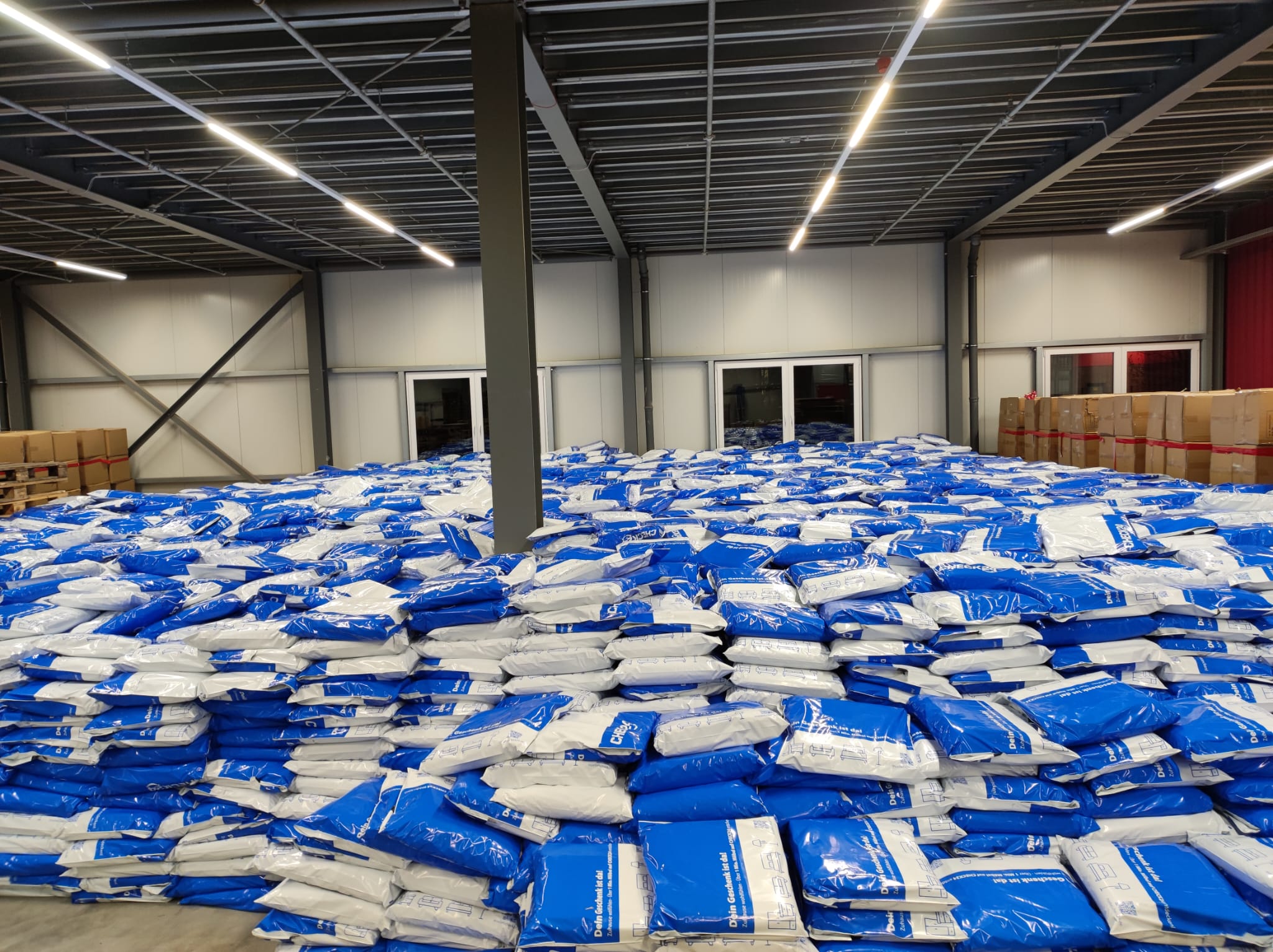
Die Aktion war angekündigt, der Termin stand, und irgendwann an diesem Morgen begann der Bestelleingang zu laufen. Nicht in der üblichen Kurve über den Tag verteilt, sondern in einem Schub. Am Ende waren es knapp 25.000 Pakete, die innerhalb von zwei Tagen gepackt, etikettiert und abgeholt werden mussten. Keine Woche, keine Ruhezeit dazwischen, kein Nachliefern in Ruhe.
So etwas passiert nicht versehentlich. Eine Fulfillment Sonderaktion auf einem bekannten Portal ist ein geplantes Ereignis, und genau das macht sie planbar. Aber eben nur, wenn die Planung früh genug anfängt und alle Beteiligten dieselben Zahlen vor sich haben. Der Fall, um den es hier geht, war eine Aktion von CHECK24 mit der Marke biberna. Fulgrid hat dabei nicht nur gelagert und verpackt, sondern den gesamten Prozess dahinter verantwortet: Design, Entwurf, Produktion, IT und Logistik. Und das ganze in echter Rekordzeit.
Wer hier zusammengearbeitet hat
CHECK24 kennen die meisten als Vergleichsportal. Wer dort eine Aktion fährt, spricht sehr viele Menschen gleichzeitig an, und zwar Menschen, die das Portal ohnehin schon nutzen und vertrauen. Das ist für eine Marke attraktiv und logistisch gleichzeitig das Anspruchsvollste, was man sich vornehmen kann. Die Nachfrage kommt nicht langsam an, sie kommt auf einmal. Und sie kommt mit einer Erwartung: Was auf so einem Portal bestellt wird, soll schnell da sein.
biberna ist eine etablierte Marke im Bereich Bettwaren und Heimtextilien. Produkte, die sich gut für eine Aktion eignen, weil sie erklärungsarm sind und einen klaren Nutzen haben. Gleichzeitig sind es Artikel mit Volumen. Ein Paket mit Bettwaren ist kein Brief. Das wirkt sich auf Lagerfläche, Packplätze, Kartonagen und auf das Volumen aus, das am Ende am Verladetor steht.
Fulgrid hat in diesem Projekt die Rolle übernommen, die sonst auf mehrere Dienstleister verteilt ist. Nicht nur Fulfillment im engeren Sinne, sondern die Kette davor: die Gestaltung, den Entwurf, die Produktion, die Anbindung der Systeme und dann den Versand. Der Grund dafür ist nicht Vollständigkeit um ihrer selbst willen. Der Grund ist, dass bei einem so engen Zeitfenster jede Schnittstelle zwischen zwei Unternehmen eine mögliche Verzögerung ist.
Bleib auf dem Stand
Bestelle den FulGrid Newsletter und bekomme immer die neusten Informationen!
Newsletter abonbierenWarum Fulfillment Sonderaktionen anders funktionieren als Tagesgeschäft
Im normalen Onlinehandel schwankt das Volumen. Es gibt starke und schwache Tage, es gibt Saisonspitzen, es gibt Wetter und Werbung. Ein eingespieltes Lager fängt das ab, weil die Schwankung sich in einem Rahmen bewegt, für den die Struktur gebaut ist.
Eine Sonderaktion sprengt diesen Rahmen absichtlich. Das Volumen eines Aktionstages hat mit dem Durchschnitt nichts mehr zu tun. Und weil die Aktion beworben wird, ist der Kundenkreis besonders aufmerksam. Wer hier zu spät liefert, produziert nicht nur Nachfragen im Kundenservice, sondern beschädigt die Zusammenarbeit mit dem Portal und den Ruf der Marke bei einem Publikum, das man sich gerade erst erschlossen hat.
Daraus folgt eine unangenehme Wahrheit: Bei einer Aktion gibt es kein Aufholen. Was am zweiten Tag nicht raus ist, ist verloren, weil kein dritter Tag mehr zur Verfügung steht, an dem sich der Rückstand abbauen ließe. Die Kapazität muss vorher stehen, nicht mitten im Ereignis wachsen.
Was vorher passiert ist
Klare Absprachen statt Annahmen
Der wichtigste Teil dieses Projekts war nicht der Versandtag, sondern die Zeit davor. Wer wann welche Daten liefert, in welcher Form die Bestellungen ankommen, wie mit Adressfehlern umgegangen wird, wer im Zweifel entscheidet: All das war abgesprochen, bevor die erste Bestellung eingelaufen ist. Klingt banal, ist aber der Unterschied zwischen einem Ablauf und einem Krisenmanagement. In einem Zwei-Tage-Fenster hat niemand Zeit, eine Frage zu klären, die man vorher hätte klären können.
Die Lagerfläche für den Fall umgebaut
Ein Lager ist normalerweise darauf optimiert, viele verschiedene Artikel für viele verschiedene Bestellungen zusammenzusuchen. Eine Aktion ist das Gegenteil: wenige Artikel, sehr viele fast gleiche Bestellungen. Diese Situation belohnt eine völlig andere Anordnung. Die Aktionsware wandert nah an die Packplätze, die Laufwege werden kurz, Kartonagen und Verbrauchsmaterial stehen dort, wo sie gebraucht werden, und die Fläche für die fertigen Pakete ist vorher freigeräumt.
Der letzte Punkt wird oft unterschätzt. Wenn man in kurzer Zeit sehr viele Pakete produziert, entsteht ein Stau nicht beim Packen, sondern danach. Fertige Pakete brauchen Platz, und zwar sortiert, damit die Abholung schnell geht. Fehlt dieser Platz, blockiert die eigene Produktion sich selbst.
Die Abholung mitgedacht
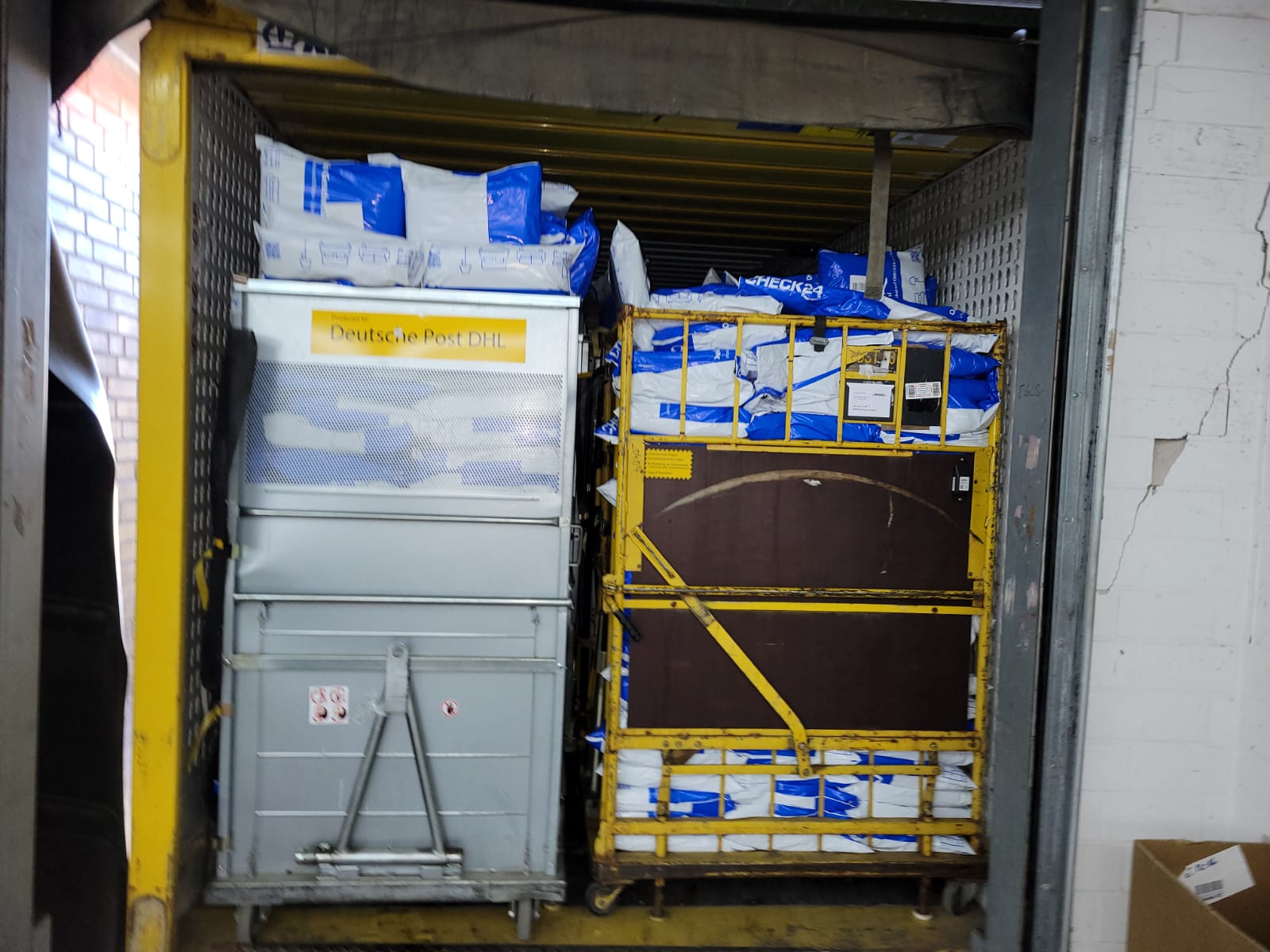
Deshalb gehörten die Absprachen mit dem KEP-Dienstleister von Anfang an dazu. Nicht als Anruf am Aktionstag, sondern als Teil der Planung: wann abgeholt wird, in welchen Einheiten, wie die Sendungen übergeben werden, damit sie im Netz des Dienstleisters direkt weiterlaufen und nicht am ersten Umschlagpunkt liegen bleiben. Die schnellste Lieferung entsteht nicht dadurch, dass im Lager schneller gepackt wird, sondern dadurch, dass die Pakete früh und in verarbeitbarer Form im Transportnetz sind.
Design, Produktion, IT und Logistik aus einer Hand
Bei dieser Aktion lag auch das Drumherum bei Fulgrid: Gestaltung und Entwurf des Aktionsartikels und seiner Verpackung, die Produktion und die IT-Anbindung. Das hat einen praktischen Effekt, der sich erst im engen Zeitfenster zeigt. Wer die Verpackung mit entwirft und weiß, wie im eigenen Lager gepackt wird, entwirft sie anders. Format, Faltung, Griffigkeit, wie viele Einheiten auf eine Palette gehen: Diese Entscheidungen fallen am Entwurfstisch und wirken sich am Packplatz aus, mit jedem einzelnen Paket. Der Versand aus zwei Produktionsländern (CHINA und PAKISTAN) wurden gleich mit organisiert.
Genauso bei der IT. Wenn die Bestelldaten in einem Format kommen, das das Lagersystem direkt verarbeitet, entfällt der Zwischenschritt, den sonst jemand von Hand macht. Bei ein paar hundert Bestellungen ist das ein Ärgernis, bei knapp 25.000 in zwei Tagen ist es der Unterschied zwischen möglich und unmöglich.
Was Händler und Marken daraus mitnehmen können
Wer eine Sonderaktion plant, sollte nicht zuerst über den Preis nachdenken, sondern über die Kette dahinter. Ein paar Fragen, die vorher beantwortet sein sollten:
- In welchem Zeitfenster soll ausgeliefert werden, und was heißt das für die Zahl der Pakete pro Stunde?
- Liegt die Ware rechtzeitig und an der richtigen Stelle im Lager, oder muss sie erst umgelagert werden?
- Wie kommen die Bestelldaten ins System, automatisch oder mit einem Zwischenschritt von Hand?
- Ist die Abholung mit dem Transportdienstleister verbindlich vereinbart, inklusive Menge und Übergabeform?
- Wer entscheidet während der Aktion, wenn etwas unklar ist?
- Wohin mit Rücksendungen, die nach einer Aktion konzentriert zurückkommen?
Der Kern ist Planungssicherheit. Geschwindigkeit allein ist keine Leistung, wenn sie nicht zuverlässig ist. Und Zuverlässigkeit entsteht bei einer Aktion nicht durch Einsatz im Moment, sondern durch Vorbereitung. Die Aktion mit CHECK24 und biberna hat funktioniert, weil die Flexibilität vorher eingebaut war: in der Fläche, in den Systemen, in den Absprachen. Am Aktionstag selbst musste dann nur noch abgearbeitet werden, was vorher durchdacht worden war.
Für Marken und Händler mit Aktionsgeschäft heißt das: Die Frage ist nicht, ob ein Dienstleister eine Spitze grundsätzlich schafft. Die Frage ist, wie früh er mit am Tisch sitzt.
The campaign had been announced, the date was set, and at some point that morning the orders started coming in. Not in the usual curve spread across the day, but in one surge. In the end, it was just under 25,000 parcels that had to be packed, labelled and collected within two days. No week, no breather in between, no leisurely follow-up deliveries.
Something like this does not happen by accident. A special campaign on a well-known portal is a planned event, and that is exactly what makes it plannable. But only if the planning starts early enough and everyone involved has the same figures in front of them. The case in question here was a campaign by CHECK24 with the brand biberna. Fulgrid did not just store and pack, but took responsibility for the entire process behind it: design, draft, production, IT and logistics.
Who worked together here
Most people know CHECK24 as a comparison portal. Anyone running a campaign there is addressing a great many people at the same time, and people who already use and trust the portal anyway. That is attractive for a brand and at the same time the most demanding thing you can take on logistically. Demand does not arrive slowly, it arrives all at once. And it comes with an expectation: whatever is ordered on a portal like that should be there quickly.
biberna is an established brand in the field of bedding and home textiles. Products that lend themselves well to a campaign because they need little explanation and have a clear benefit. At the same time, they are items with volume. A parcel of bedding is not a letter. That has an effect on storage space, packing stations, cartons and on the volume that ends up standing at the loading bay.
In this project, Fulgrid took on the role that is otherwise spread across several service providers. Not just fulfilment in the narrow sense, but the chain before it: the design, the draft, the production, the connection of the systems and then the shipping. The reason for this is not completeness for its own sake. The reason is that with such a tight time window, every interface between two companies is a possible delay.
Why special campaigns work differently from day-to-day business
In normal online retail, volumes fluctuate. There are strong and weak days, there are seasonal peaks, there is weather and advertising. A well-run warehouse absorbs that, because the fluctuation stays within a range the structure was built for.
A special campaign deliberately blows that range apart. The volume of a campaign day has nothing to do with the average any more. And because the campaign is advertised, the customer base is particularly attentive. Anyone who delivers late here not only creates enquiries in customer service, but damages the cooperation with the portal and the brand's reputation among an audience that has only just been won over.
From this follows an uncomfortable truth: in a campaign, there is no catching up. Whatever is not out on the second day is lost, because there is no third day available on which the backlog could be worked off. The capacity has to be in place beforehand, not grow in the middle of the event.

What happened beforehand
Clear agreements instead of assumptions
The most important part of this project was not the shipping day, but the time before it. Who delivers which data and when, in what form the orders arrive, how address errors are handled, who decides in case of doubt: all of that had been agreed before the first order came in. It sounds trivial, but it is the difference between a process and crisis management. In a two-day window, nobody has time to clarify a question that could have been clarified beforehand.

The storage space rebuilt for the occasion
A warehouse is normally optimised for picking many different items for many different orders. A campaign is the opposite: few items, very many almost identical orders. This situation rewards a completely different layout. The campaign goods move close to the packing stations, the walking distances become short, cartons and consumables are where they are needed, and the space for the finished parcels is cleared beforehand.
The last point is often underestimated. When you produce a great many parcels in a short time, a bottleneck arises not at the packing stage, but afterwards. Finished parcels need space, and sorted at that, so that collection goes quickly. If that space is missing, your own production blocks itself.

Collection factored in
That is why the arrangements with the CEP service provider were part of it from the very beginning. Not as a phone call on the day of the campaign, but as part of the planning: when collection takes place, in which units, how the shipments are handed over so that they move straight on within the service provider's network and do not get stuck at the first transhipment point. The fastest delivery does not come from packing faster in the warehouse, but from having the parcels in the transport network early and in a form that can be processed.
Design, production, IT and logistics from a single source
For this campaign, everything around it was also handled by Fulgrid: the design and conception of the promotional item and its packaging, the production and the IT integration. This has a practical effect that only becomes apparent within a tight time window. If you help design the packaging and know how packing is done in your own warehouse, you design it differently. Format, folding, grip, how many units fit on a pallet: these decisions are made at the design table and take effect at the packing station, with every single parcel.
The same applies to IT. If the order data arrives in a format that the warehouse system processes directly, the intermediate step that someone would otherwise do by hand is no longer needed. With a few hundred orders that is an annoyance, with almost 25,000 in two days it is the difference between possible and impossible.
What retailers and brands can take away from this
Anyone planning a special campaign should not think about the price first, but about the chain behind it. A few questions that should be answered beforehand:
- Within which time window should delivery take place, and what does that mean for the number of parcels per hour?
- Is the goods in the warehouse on time and in the right place, or do they first have to be relocated?
- How does the order data get into the system, automatically or with an intermediate step by hand?
- Has the collection been firmly agreed with the transport service provider, including quantity and form of handover?
- Who decides during the campaign if something is unclear?
- Where do returns go when they come back in concentrated form after a campaign?
The core issue is planning reliability. Speed alone is not an achievement if it is not dependable. And with a campaign, dependability does not come from effort in the moment, but from preparation. The campaign with CHECK24 and biberna worked because the flexibility had been built in beforehand: in the space, in the systems, in the arrangements. On the day of the campaign itself, all that was left was to work through what had been thought out in advance.
For brands and retailers with promotional business, this means: the question is not whether a service provider can handle a peak in principle. The question is how early they are at the table.
Einfach konfigurierenEasy configure
Konfigurieren Sie Ihr Fulfillment-AngebotConfigure Your Fulfillment Offering
Jetzt Angebot anfordernRequest a Quote Now